It usually starts small. A patch of paint that’s bubbled or peeled. A corner of trim that looks a little darker than the rest. A spot near the gutter that feels soft when you press on it. Nothing dramatic — easy to tell yourself you’ll deal with it later.
Here’s the problem with later: wood rot doesn’t wait, and what you can see on the surface is almost never the whole story. By the time decay shows through the paint, it has usually been working behind that paint for months or years. The visible damage is the tip of it. The real question is how far it went where you can’t see.
What Wood Rot Actually Is
Wood rot isn’t the wood “wearing out.” It’s a living process — wood-decay fungi feeding on the material your house is built from. Those fungi need four things to grow: a food source (the wood), oxygen, a workable temperature, and, above all, moisture.
Three of those four are always present. You can’t take the wood away, you can’t take the air away, and Omaha spends plenty of the year in the temperature range fungi like. The one variable you can actually control is moisture. That’s the entire game. Keep wood dry and it lasts for decades. Let water sit against it and the clock starts.
This is also why the term “dry rot” is misleading. There is no such thing as rot without moisture. What people call dry rot is simply decay that has dried out after the damage was done — the wood is crumbly and the fungus is dormant, but water is what got it there.
Why It Always Starts at the Corners
Look at where rot shows up on a house and you’ll see the same pattern over and over: corners, joints, seams, the bottoms of trim boards, fascia behind gutters, the underside of soffits. Rot starts wherever water can get in and then can’t easily get back out.
Corners and joints are the worst offenders for two reasons. First, that’s where two pieces of wood meet, and a joint is a gap — caulk and paint are the only things sealing it, and both fail over time. Second, end grain. The cut end of a board soaks up water like a straw, far faster than the flat face does. Every joint puts vulnerable end grain right where two boards meet.
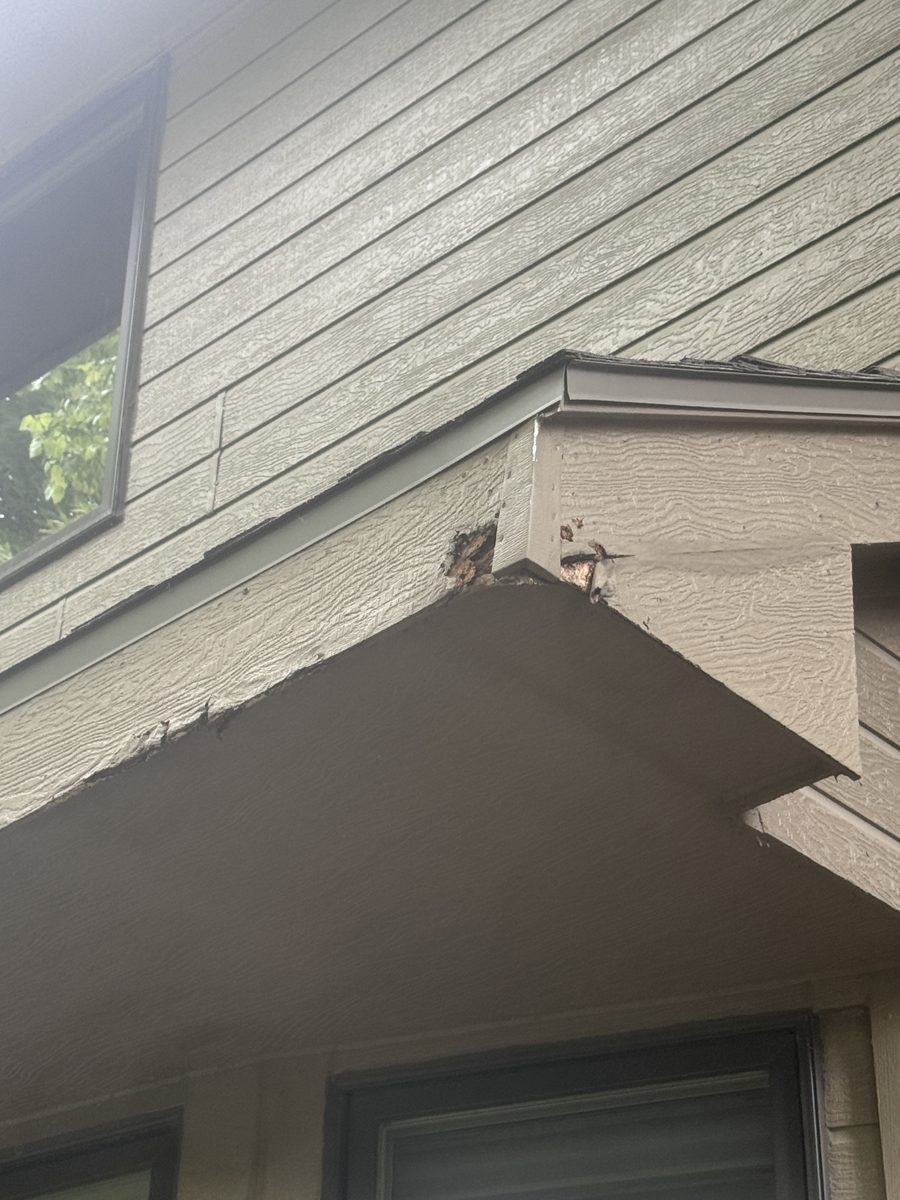
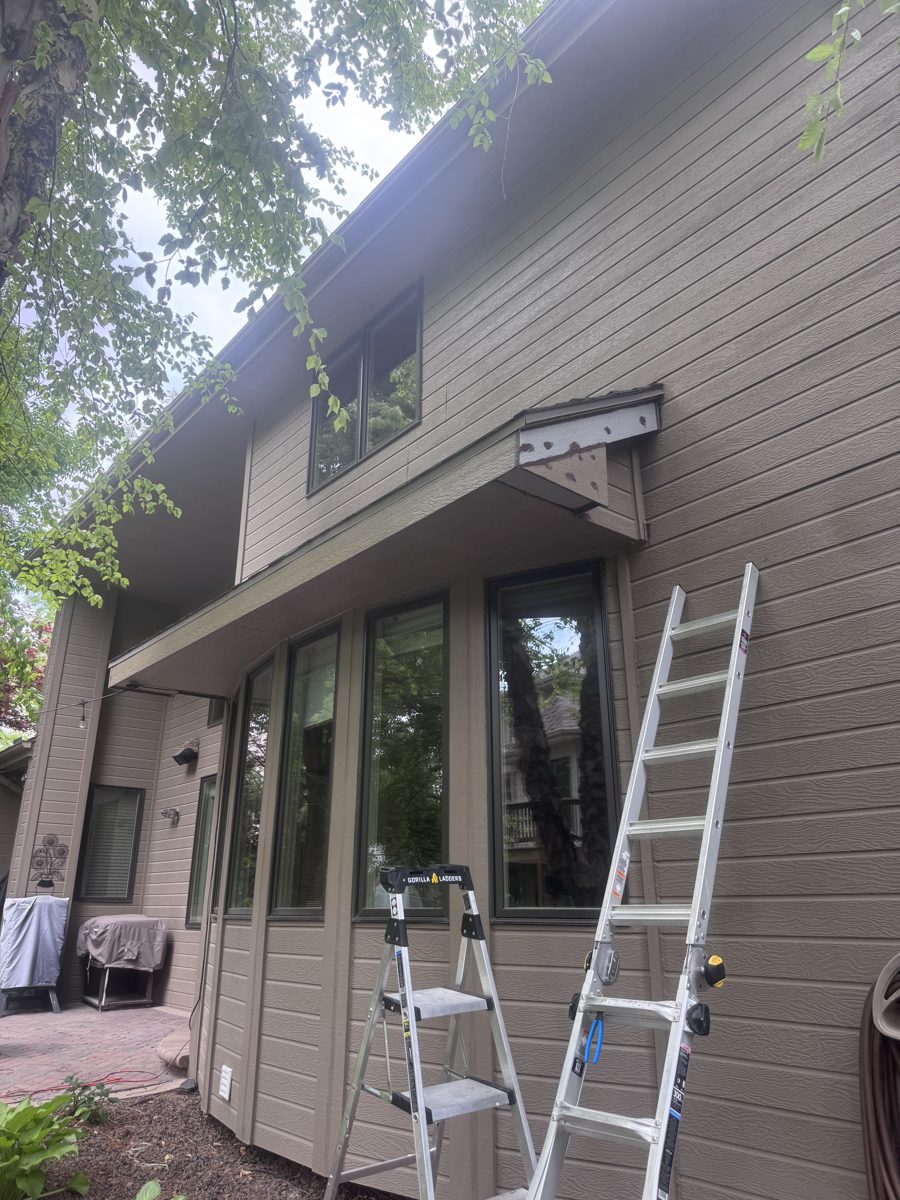
Cantilevered box-outs and pop-outs — the bumped-out sections of a house that hang past the foundation, often under a window — are especially prone to it. They have more corners, more seams, and more complex flashing than a flat wall, and their flat top ledges and undersides give water places to pool and linger. The repair pictured above was exactly that: a pop-out where water found the corner joint and worked its way in.
Engineered Siding Isn’t Immune
A lot of newer homes in The Ridges have engineered wood siding — LP SmartSide and similar products. It’s good material. Wood strands bonded with resin, treated with zinc borate for rot and termite resistance, and finished with a factory primer or overlay. It holds up better than the old hardboard siding it replaced.
But “more resistant” is not “immune,” and here’s the catch most homeowners miss: the protection is strongest on the factory-finished surfaces. Every time a board is cut on site — and every board gets cut — that exposes an edge the factory never coated. If those field-cut edges aren’t sealed properly, and if joints aren’t kept caulked and painted, water gets into the core. Once it does, engineered siding can swell, delaminate, and rot just like solid wood.
The vulnerable points are the same as ever: butt joints, corners, the bottom course near grade, and anywhere trim meets siding.
What Omaha Weather Does to It
Omaha is hard on exterior wood. We get wind-driven rain that pushes water sideways into seams a vertical drip would never reach. We get big humidity swings. And we get freeze-thaw cycles all winter long.
Freeze-thaw is the quiet destroyer. Water works into a small gap. It freezes, and freezing water expands. That expansion pries the gap a little wider. It thaws, and now a slightly bigger opening is ready to take in slightly more water next time. Repeat that dozens of times over a winter and a hairline crack in the caulk becomes an open invitation. The wood behind it stays wet, and wet wood in 40-to-50-degree weather is exactly what decay fungi are waiting for.
The Warning Signs You Can Spot
You don’t need to be a contractor to catch wood rot early. Walk your house once or twice a year and look for these:
- Paint that’s bubbling, peeling, or cracking in one localized area. Paint fails over a wet substrate. A spot that won’t hold paint is telling you something underneath is staying damp.
- Discoloration or dark staining, especially streaks running down from a joint, gutter, or corner.
- Soft or spongy wood. Press firmly with your thumb, or tap with the handle of a screwdriver. Sound wood is hard and resists. Rotted wood gives, dents, or feels punky.
- Visible holes, crumbling, or a cracked, cubical texture in the surface of the wood.
- Caulk that has pulled away, cracked, or gone missing at joints and corners — the seal has failed and water has a path in.
- A musty smell near trim or soffits, or any fungal growth on the surface.
Any one of these is worth a closer look. Two or three together in the same spot means it’s time to open it up.
The hard truth of wood rot: by the time you can see it, the fungus has usually traveled. Paint and the outer skin of the board hide the spread. The soft spot you found is real — but it’s a clue, not the full measurement.
Repair or Replace?
The single biggest factor in what a wood rot job costs is how early it’s caught.
Localized rot, found early, is a repair. You cut back to sound wood, replace the affected section, fix the leak, and refinish. It’s contained and predictable.
Rot that’s been ignored long enough to spread into the sheathing or the framing behind the siding is a bigger project. Now you’re not just replacing trim — you’re into structural members, and the scope grows fast. The decay can also let water past the wall surface entirely, into the cavity, where it ruins insulation and creates conditions for mold.
There’s no way to know which situation you’re in until someone with experience opens it up and probes how far the soft wood goes. That’s exactly why a real estimate matters — guessing from the curb undersells small jobs and gets blindsided by big ones.
What a Repair Done Right Looks Like
Cutting out rotted wood and nailing in a new board is the easy part. A repair that actually lasts is about the steps around it:
- Find and fix the moisture source first. Failed flashing, a gap in the caulk, a gutter dumping water in the wrong place, grading that holds moisture against the wall. If the water path isn’t fixed, the rot comes back — it’s that simple.
- Cut back well past the damage. Decay fungus extends beyond the obviously rotted wood. The cut has to reach solid, sound material with margin to spare, or you’ve left the infection in the wall.
- Rebuild with the right materials. Matching the existing siding and trim, properly fastened, with correct spacing and flashing so water sheds the way it should.
- Seal every cut edge. This is the step amateurs skip and the reason their repairs fail. Every field-cut end and edge gets primed and sealed before it goes up. Unsealed end grain is just the next rot waiting to happen.
- Caulk the joints and paint. A continuous, properly tooled bead of quality exterior caulk at the seams, then primer and topcoat. Paint is not decoration here — it’s the wood’s raincoat.
Miss the moisture source and you’ve bought yourself a repeat. Skip the edge sealing and you’ve started the next clock. Done in the right order, a wood rot repair is permanent.
Why Waiting Costs You
It’s tempting to leave a small soft spot for “someday.” Here’s what someday looks like if the rot keeps going:
The decay spreads from trim into siding, from siding into sheathing, from sheathing into the framing that holds the wall up. A contained trim repair becomes a structural one. Water that gets past the wall surface soaks insulation and can lead to mold inside the cavity, which is a health issue and a much larger remediation. And rotted, moisture-softened wood is exactly what carpenter ants and termites look for — decay doesn’t just damage wood, it advertises your house to the insects that finish the job.
Every one of those outcomes is more expensive and more disruptive than dealing with the soft spot when it was still just a soft spot.
Want this handled by someone who’s done it for two decades? Our Wood Rot & Siding Repair service covers the full job — finding the leak, cutting back to sound wood, rebuilding, sealing, and refinishing so it stays fixed.
Let Your Handy Neighbor Take a Look
We’ve spent 20-plus years doing exterior repairs, and wood rot is one of the most common things we get called for — usually after a homeowner finally pressed on that soft spot and felt it give. The good news is that caught early, it’s a straightforward, contained repair.
If you’ve noticed bubbling paint, dark staining, or a spot that feels soft anywhere on your trim, fascia, soffits, or siding, the worst thing you can do is wait and hope. The second-worst is to guess at the scope yourself.
Have someone with experience take a real look. Book a free, no-obligation on-site estimate and we’ll show you exactly what’s going on — and give you a flat-rate written quote before any work starts.